
 E-submission
 THE KOREAN LIVER CANCER ASSOCIATION
Search
- Page Path
- HOME > Search
Original Articles
- Hepatocellular Carcinoma in Korea: an Analysis of the 2015 Korean Nationwide Cancer Registry
- Jun Sik Yoon, Han Ah Lee, Hwi Young Kim, Dong Hyun Sinn, Dong Ho Lee, Suk Kyun Hong, Ju-Yeon Cho, Jonggi Choi, Young Chang, Hyun-Joo Kong, Eunyang Kim, Young-Joo Won, Jeong-Hoon Lee
- J Liver Cancer. 2021;21(1):58-68. Published online March 31, 2021
- DOI: https://doi.org/10.17998/jlc.21.1.58
- 6,569 Views
- 265 Downloads
- 18 Citations
-
 Abstract
 PDF
PDF Supplementary Material
 - Background/Aim
s: Hepatocellular carcinoma (HCC) is the sixth most common cancer and the second leading cause of cancer-related death in Korea. This study evaluated the characteristics of Korean patients newly diagnosed with HCC in 2015.
Methods
Data from the Korean Primary Liver Cancer Registry (KPLCR), a representative sample of patients newly diagnosed with HCC in Korea, were analyzed. A total of 1,558 patients with HCC registered in the KPLCR in 2015 were investigated.
Results
The median age was 61.0 years (interquartile range, 54.0-70.0 years), and men accounted for 79.7% of the subjects. Hepatitis B virus infection was the most common underlying liver disease (58.1%). According to the Barcelona Clinic Liver Cancer (BCLC) staging system, stage 0, A, B, C, and D HCCs accounted for 14.2%, 31.5%, 7.6%, 39.0%, and 7.8% of patients, respectively. Transarterial therapy (32.1%) was the most commonly performed initial treatment, followed by surgical resection (23.2%), best supportive care (20.2%), and local ablation therapy (10.7%). Overall, 34.5% of patients were treated in accordance with the BCLC guidelines: 59.2% in stage 0/A, 48.4% in stage B, 18.1% in stage C, and 71.6% in stage D. The 1-, 3-, and 5-year OS rates were 67.1%, 50.9%, and 27.0%, respectively.
Conclusions
In 2015, approximately 45% of Korean HCC cases were diagnosed at a very early or early stage, and 35% of patients underwent potentially curative initial treatment. BCLC guidance was followed in 34.5% of patients; in patients with stage B or C disease, there was relatively low adherence. -
Citations
Citations to this article as recorded by
- Concurrent nivolumab and external beam radiation therapy for hepatocellular carcinoma with macrovascular invasion: A phase II study
Bo Hyun Kim, Hee Chul Park, Tae Hyun Kim, Young-Hwan Koh, Jung Yong Hong, Yuri Cho, Dong Hyun Sinn, Boram Park, Joong-Won Park
JHEP Reports.2024; 6(4): 100991. CrossRef - Identification of patients with favorable prognosis after resection in intermediate-stage-hepatocellular carcinoma
Han Ah Lee, Minjong Lee, Jeong-Ju Yoo, Ho Soo Chun, Yewan Park, Hwi Young Kim, Tae Hun Kim, Yeon Seok Seo, Dong Hyun Sinn
International Journal of Surgery.2024; 110(2): 1008. CrossRef - Factors associated with the survival outcomes of patients with untreated hepatocellular carcinoma: An analysis of nationwide data
Min Jung Kwon, Soy Chang, Ji Hoon Kim, Ji Won Han, Jeong Won Jang, Jong Young Choi, Seung Kew Yoon, Pil Soo Sung
Frontiers in Oncology.2023;[Epub] CrossRef - The imitator of immune-tolerant chronic hepatitis B: A killer in disguise
Moon Haeng Hur, Jeong-Hoon Lee
Clinical and Molecular Hepatology.2023; 29(2): 363. CrossRef - Current status of ultrasonography in national cancer surveillance program for hepatocellular carcinoma in South Korea: a large-scale multicenter study
Sun Hong Yoo, Soon Sun Kim, Sang Gyune Kim, Jung Hyun Kwon, Han-Ah Lee, Yeon Seok Seo, Young Kul Jung, Hyung Joon Yim, Do Seon Song, Seong Hee Kang, Moon Young Kim, Young-Hwan Ahn, Jieun Han, Young Seok Kim, Young Chang, Soung Won Jeong, Jae Young Jang, J
Journal of Liver Cancer.2023; 23(1): 189. CrossRef - A Case of Transverse Myelitis Following Treatment with Atezolizumab for Advanced Hepatocellular Carcinoma
Kyung Han Kim, Yang-Hyun Baek, Yeo Wool Kang, Byeol-A Yoon, Sang Yi Moon
The Korean Journal of Gastroenterology.2023; 82(1): 35. CrossRef - Comparative Analysis of Atezolizumab Plus Bevacizumab and Hepatic Artery Infusion Chemotherapy in Unresectable Hepatocellular Carcinoma: A Multicenter, Propensity Score Study
Ji Kim, Hee-Chul Nam, Chang-Wook Kim, Hee Cho, Jae-Sung Yoo, Ji Han, Jeong Jang, Jong Choi, Seung Yoon, Hyun Yang, Si Bae, Suho Kim, Jung Oh, Ho Chun, Chang Jeon, Jaegyoon Ahn, Pil Sung
Cancers.2023; 15(17): 4233. CrossRef - A nationwide study on the current treatment status and natural prognosis of hepatocellular carcinoma in elderly
Jeong-Ju Yoo, Jayoun Lee, Gi Hong Choi, Min Woo Lee, Dong Ah Park
Scientific Reports.2023;[Epub] CrossRef - Modeling the Risk of Liver Cancer in Adults: A Machine Learning Investigation into the Role of Obesity and Overweight
Bah Karamo, Bah Adama Ns , Jallow Amadou Wurry
Archives of Pathology and Clinical Research.2023; 7(1): 034. CrossRef - Surgical resection versus ablation for early hepatocellular carcinoma: The debate is still open
Bo Hyun Kim
Clinical and Molecular Hepatology.2022; 28(2): 174. CrossRef - Cause of death and cause-specific mortality for primary liver cancer in South Korea: A nationwide population-based study in hepatitis B virus-endemic area
Bo Hyun Kim, Dahhay Lee, Kyu-Won Jung, Young-Joo Won, Hyunsoon Cho
Clinical and Molecular Hepatology.2022; 28(2): 242. CrossRef - Impact of tumor size on hepatectomy outcomes in hepatocellular carcinoma: a nationwide propensity score matching analysis
Suk Kyun Hong, Kwang-Woong Lee, Sola Lee, Su young Hong, Sanggyun Suh, Eui Soo Han, YoungRok Choi, Nam-Joon Yi, Kyung-Suk Suh
Annals of Surgical Treatment and Research.2022; 102(4): 193. CrossRef - Efficacy and feasibility of surgery and external radiotherapy for hepatocellular carcinoma with portal invasion: A meta-analysis
Han Ah Lee, Yeon Seok Seo, In-Soo Shin, Won Sup Yoon, Hye Yoon Lee, Chai Hong Rim
International Journal of Surgery.2022; 104: 106753. CrossRef - Yoon et al. Hepatocellular Carcinoma in Korea: an Analysis of the 2015 Korean Nationwide Cancer Registry
Jeong-Hoon Lee
Journal of Liver Cancer.2022; 22(2): 207. CrossRef - Surveillance for hepatocellular carcinoma: It is time to move forward
Bo Hyun Kim, Yuri Cho, Joong-Won Park
Clinical and Molecular Hepatology.2022; 28(4): 810. CrossRef - Treatment patterns for hepatocellular carcinoma in patients with Child–Pugh class B and their impact on survival: A Korean nationwide registry study
Dongsub Jeon, Gi‐Won Song, Han Chu Lee, Ju Hyun Shim
Liver International.2022; 42(12): 2830. CrossRef - Metastatic breast cancer from a hepatocellular carcinoma: a case report
Hyewon Bang, Nam-Hee Kim, Seung Hye Choi, Si Hyun Bae, Eun Sun Jung, Ki Ouk Min, Yong Hwa Eom
Korean Journal of Clinical Oncology.2022; 18(2): 93. CrossRef - Current Status and Future Directions of Hepatocellular Carcinoma Surveillance Test Based on Cost-effective Analysis
Jihyun An
The Korean Journal of Gastroenterology.2021; 78(5): 255. CrossRef
- Concurrent nivolumab and external beam radiation therapy for hepatocellular carcinoma with macrovascular invasion: A phase II study

- Hepatocellular Carcinoma in Korea between 2012 and 2014: an Analysis of Data from the Korean Nationwide Cancer Registry
- Young Eun Chon, Han Ah Lee, Jun Sik Yoon, Jun Yong Park, Bo Hyun Kim, In Joon Lee, Suk Kyun Hong, Dong Hyeon Lee, Hyun-Joo Kong, Eunyang Kim, Young-Joo Won, Jeong-Hoon Lee
- J Liver Cancer. 2020;20(2):135-147. Published online September 30, 2020
- DOI: https://doi.org/10.17998/jlc.20.2.135
- 4,519 Views
- 158 Downloads
- 15 Citations
-
Abstract
PDFSupplementary Material
- Background/Aim
s: Considering the high prevalence and mortality of hepatocellular carcinoma (HCC) in Korea, accurate statistics for HCC are important. We evaluated the characteristics of Korean patients with newly diagnosed HCC.
Methods
We retrospectively evaluated data from the Korean Primary Liver Cancer Registry (KPLCR). The baseline characteristics, treatment modalities, and overall survival (OS) of 4,572 patients with HCC registered in the KPLCR between 2012 and 2014 were investigated.
Results
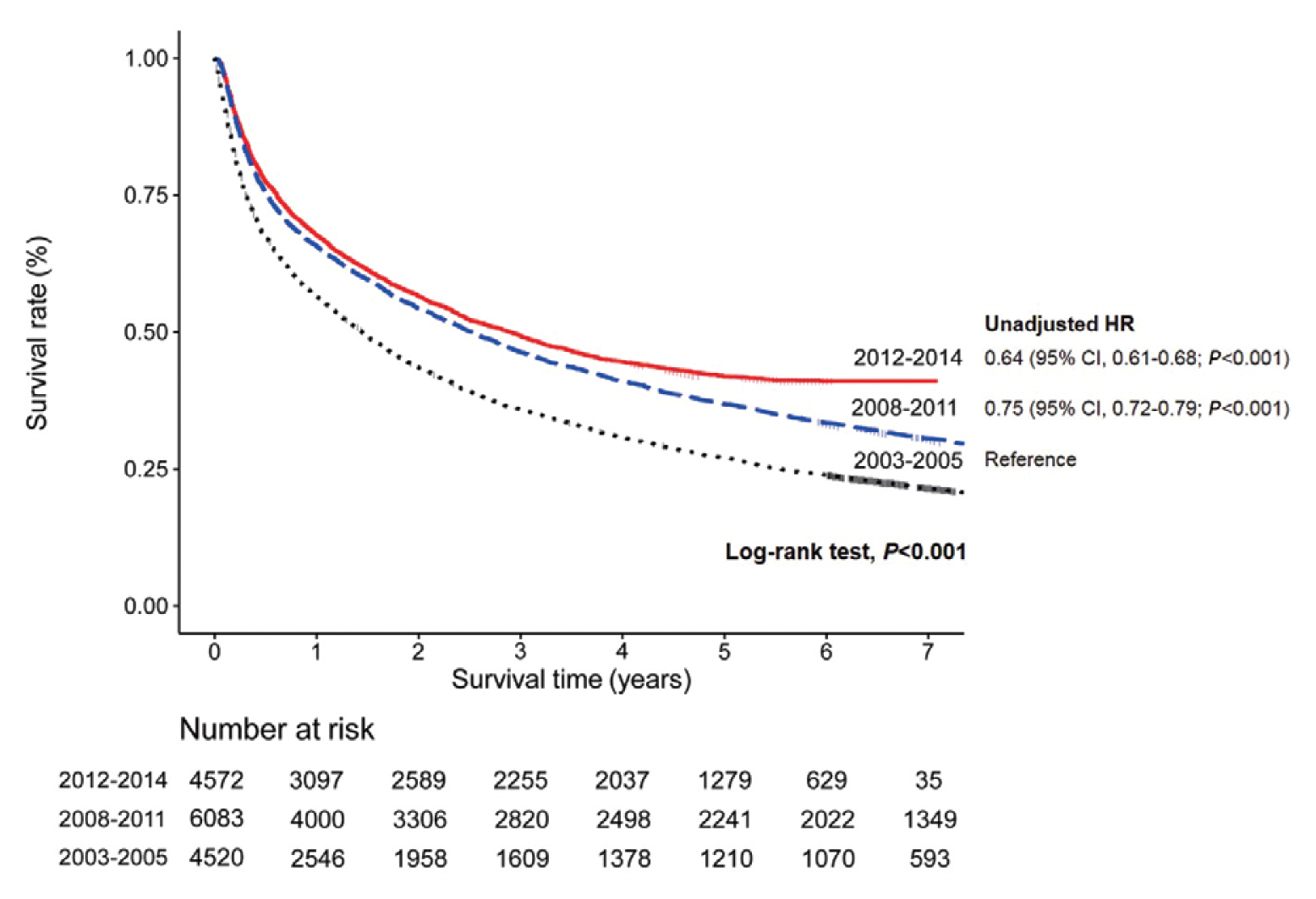
At the time of HCC diagnosis, the median age was 60.0 years, with male predominance (79.6%). Hepatitis B virus infection was the most common etiology (59.1%). The rates of Barcelona Clinic Liver Cancer (BCLC) stages 0, A, B, C, and D at diagnosis were 3.9%, 36.9%, 12.5%, 39.4%, and 7.3%, respectively. The proportion of very early or early stage HCC at diagnosis (BCLC stage 0 or A) in the 2012-2014 cohort was significantly lower than that in the 2008-2011 cohort (40.8% vs. 48.3%, P<0.001). Transarterial therapy (37.5%) was the most commonly performed initial treatment, followed by surgical resection (19.8%), best supportive care (19.1%), and local ablation (10.6%). The median OS was 2.9 years, and the 1-, 3-, and 5-year OS rates were 67.7%, 49.3% and 41.9%, respectively. The OS rate of the 2012-2014 cohort was significantly higher than that of the 2008-2011 cohort (log-rank, P<0.001).
Conclusions
The OS of HCC patients registered in the KPLCR between 2012 and 2014 significantly improved. Nevertheless, as about half of the HCC patients were diagnosed at an advanced stage, vigorous and optimized HCC screening strategies should be implemented. -
Citations
Citations to this article as recorded by- Hepatocellular carcinoma incidence is decreasing in Korea but increasing in the very elderly
Young Eun Chon, Seong Yong Park, Han Pyo Hong, Donghee Son, Jonghyun Lee, Eileen Yoon, Soon Sun Kim, Sang Bong Ahn, Soung Won Jeong, Dae Won Jun
Clinical and Molecular Hepatology.2023; 29(1): 120. CrossRef - 2022 KLCA-NCC Korea practice guidelines for the management of hepatocellular carcinoma
Journal of Liver Cancer.2023; 23(1): 1. CrossRef - Factors associated with the survival outcomes of patients with untreated hepatocellular carcinoma: An analysis of nationwide data
Min Jung Kwon, Soy Chang, Ji Hoon Kim, Ji Won Han, Jeong Won Jang, Jong Young Choi, Seung Kew Yoon, Pil Soo Sung
Frontiers in Oncology.2023;[Epub] CrossRef - Clinical practice guideline and real-life practice in hepatocellular carcinoma: A Korean perspective
Myung Ji Goh, Dong Hyun Sinn, Jong Man Kim, Min Woo Lee, Dong Ho Hyun, Jeong Il Yu, Jung Yong Hong, Moon Seok Choi
Clinical and Molecular Hepatology.2023; 29(2): 197. CrossRef - Implications of the first edition of the Korean expert consensus-based practice recommendations for transarterial chemoembolization in the management of hepatocellular carcinoma
Jin Wook Chung
Journal of Liver Cancer.2023; 23(2): 235. CrossRef - Nomogram for predicting overall survival in patients with large (>5 cm) hepatocellular carcinoma based on real-world practice
Nalee Kim, Jeong Il Yu, Hee Chul Park, Jung Yong Hong, Ho Yeong Lim, Myung Ji Goh, Yong-Han Paik
Journal of Liver Cancer.2023; 23(2): 350. CrossRef - Surgical resection versus ablation for early hepatocellular carcinoma: The debate is still open
Bo Hyun Kim
Clinical and Molecular Hepatology.2022; 28(2): 174. CrossRef - A case report of advanced hepatocellular carcinoma treated with hepatic arterial infusion chemotherapy and sorafenib combination therapy followed by metastasectomy of lung and muscle metastases
Sang Yi Moon, Sang Young Han, Yang-Hyun Baek
Journal of Liver Cancer.2022; 22(1): 57. CrossRef - Cause of death and cause-specific mortality for primary liver cancer in South Korea: A nationwide population-based study in hepatitis B virus-endemic area
Bo Hyun Kim, Dahhay Lee, Kyu-Won Jung, Young-Joo Won, Hyunsoon Cho
Clinical and Molecular Hepatology.2022; 28(2): 242. CrossRef - 2022 KLCA-NCC Korea practice guidelines for the management of hepatocellular carcinoma
Clinical and Molecular Hepatology.2022; 28(4): 583. CrossRef - Surveillance for hepatocellular carcinoma: It is time to move forward
Bo Hyun Kim, Yuri Cho, Joong-Won Park
Clinical and Molecular Hepatology.2022; 28(4): 810. CrossRef - 2022 KLCA-NCC Korea Practice Guidelines for the Management of Hepatocellular Carcinoma
Korean Journal of Radiology.2022; 23(12): 1126. CrossRef - Hepatocellular Carcinoma in Korea: an Analysis of the 2015 Korean Nationwide Cancer Registry
Jun Sik Yoon, Han Ah Lee, Hwi Young Kim, Dong Hyun Sinn, Dong Ho Lee, Suk Kyun Hong, Ju-Yeon Cho, Jonggi Choi, Young Chang, Hyun-Joo Kong, Eunyang Kim, Young-Joo Won, Jeong-Hoon Lee
Journal of Liver Cancer.2021; 21(1): 58. CrossRef - Cost-Effectiveness of Adjuvant Immunotherapy With Cytokine-Induced Killer Cell for Hepatocellular Carcinoma Based on a Randomized Controlled Trial and Real-World Data
Jeong-Yeon Cho, Sun-Hong Kwon, Eui-Kyung Lee, Jeong-Hoon Lee, Hye-Lin Kim
Frontiers in Oncology.2021;[Epub] CrossRef - Efficacy of Hepatic Arterial Infusion Chemotherapy and Radiofrequency Ablation against Hepatocellular Carcinoma Refractory to Transarterial Chemoembolization and Vascular Variation: A Case Study
Sang Yi Moon, Sang Young Han, Yang-Hyun Baek
Kosin Medical Journal.2021; 36(2): 161. CrossRef
- Hepatocellular carcinoma incidence is decreasing in Korea but increasing in the very elderly
- Hepatocellular Carcinoma in Korea Between 2008 and 2011: an Analysis of Korean Nationwide Cancer Registry
- Jun Sik Yoon, Han Ah Lee, Jun Yong Park, Bo Hyun Kim, In Joon Lee, Young Eun Chon, Suk Kyun Hong, Dong Hyeon Lee, Hyun-Joo Kong, Young-Joo Won, Eunyang Kim, Jeong-Hoon Lee
- J Liver Cancer. 2020;20(1):41-52. Published online March 31, 2020
- DOI: https://doi.org/10.17998/jlc.20.1.41

- 5,021 Views
- 193 Downloads
- 15 Citations
-
Abstract
PDFSupplementary Material
- Backgrounds/Aims
Backgrounds/Aims: In Korea, hepatocellular carcinoma (HCC) is the sixth most common cancer and results in the second-highest cancer death rate among all cancers. We aimed to describe the characteristics of patients who were newly diagnosed with HCC in Korea between 2008 and 2011.
Methods
The Korean Primary Liver Cancer Registry (KPLCR) is a random sample consisting of approximately 15% of patients with newly diagnosed primary liver cancer registered in the Korean Central Cancer Registry. We investigated the baseline characteristics, treatment modalities, and overall survival (OS) of patients with HCC registered in the KPLCR between 2008 and 2011.
Results
A total of 6,083 patients were histologically or radiologically diagnosed with HCC. The hepatitis B virus was the predominant HCC etiology (72.0%). According to the Barcelona Clinic Liver Cancer (BCLC) staging system, stages 0, A, B, C, and D accounted for 8.6%, 39.7%, 11.5%, 33.8%, and 6.9%, respectively. Transarterial therapy (41.7%) was the most commonly performed initial treatment, followed by best supportive care (21.7%), surgical resection (16.7%), and local ablation therapies (10.6%). The overall rate of adherence to the BCLC treatment guideline was only 37.7%. The 1-, 3-, and 5-year OS rates were 65.6%, 46.2%, and 36.8%, respectively.
Conclusions
Between 2008 and 2011, approximately half of patients with HCC (48.3%) were candidates for curative treatment (BCLC stage 0 or A), but one-third of patients (33.8%) had advanced HCC (BCLC stage C). Transarterial therapy was the most commonly conducted initial treatment and the 5-year OS rate was 36.8% in this period. -
Citations
Citations to this article as recorded by- Adjuvant and neoadjuvant immunotherapies in hepatocellular carcinoma
Josep M. Llovet, Roser Pinyol, Mark Yarchoan, Amit G. Singal, Thomas U. Marron, Myron Schwartz, Eli Pikarsky, Masatoshi Kudo, Richard S. Finn
Nature Reviews Clinical Oncology.2024; 21(4): 294. CrossRef - Hepatocellular carcinoma incidence is decreasing in Korea but increasing in the very elderly
Young Eun Chon, Seong Yong Park, Han Pyo Hong, Donghee Son, Jonghyun Lee, Eileen Yoon, Soon Sun Kim, Sang Bong Ahn, Soung Won Jeong, Dae Won Jun
Clinical and Molecular Hepatology.2023; 29(1): 120. CrossRef - Implications of the first edition of the Korean expert consensus-based practice recommendations for transarterial chemoembolization in the management of hepatocellular carcinoma
Jin Wook Chung
Journal of Liver Cancer.2023; 23(2): 235. CrossRef - Surgical resection versus ablation for early hepatocellular carcinoma: The debate is still open
Bo Hyun Kim
Clinical and Molecular Hepatology.2022; 28(2): 174. CrossRef - Cause of death and cause-specific mortality for primary liver cancer in South Korea: A nationwide population-based study in hepatitis B virus-endemic area
Bo Hyun Kim, Dahhay Lee, Kyu-Won Jung, Young-Joo Won, Hyunsoon Cho
Clinical and Molecular Hepatology.2022; 28(2): 242. CrossRef - Impact of expanding hepatitis B treatment guidelines: A modelling and economic impact analysis
Young‐Suk Lim, Sang Hoon Ahn, Jae‐Jun Shim, Homie Razavi, Devin Razavi‐Shearer, Dong Hyun Sinn
Alimentary Pharmacology & Therapeutics.2022; 56(3): 519. CrossRef - Surveillance for hepatocellular carcinoma: It is time to move forward
Bo Hyun Kim, Yuri Cho, Joong-Won Park
Clinical and Molecular Hepatology.2022; 28(4): 810. CrossRef - Therapeutic Decision Making in Hepatocellular Carcinoma According to Age and Child–Pugh Class: A Nationwide Cohort Analysis in South Korea
Sunmin Park, Chai Hong Rim, Young Kul Jung, Won Sup Yoon, Alessandro Granito
Canadian Journal of Gastroenterology and Hepatology.2021; 2021: 1. CrossRef - Outcome of Immune Checkpoint Inhibitor and Molecular Target Agent Combination for Advanced Hepatocellular Carcinoma: Beyond Sorafenib Era
Nae-Yun Heo
The Korean Journal of Gastroenterology.2021; 77(3): 145. CrossRef - Rare Case of Pyogenic Brain Abscess after Transarterial Chemoembolization in a Patient with Hepatocellular Carcinoma: Case Report and Literature Review
Jun-Ho Myeong, Jeong-Ju Yoo, Sang Gyune Kim, Young Seok Kim
Journal of Liver Cancer.2021; 21(1): 81. CrossRef - Hepatocellular Carcinoma in Korea: an Analysis of the 2015 Korean Nationwide Cancer Registry
Jun Sik Yoon, Han Ah Lee, Hwi Young Kim, Dong Hyun Sinn, Dong Ho Lee, Suk Kyun Hong, Ju-Yeon Cho, Jonggi Choi, Young Chang, Hyun-Joo Kong, Eunyang Kim, Young-Joo Won, Jeong-Hoon Lee
Journal of Liver Cancer.2021; 21(1): 58. CrossRef - Glucose Variability and Risk of Hepatocellular Carcinoma in Patients with Diabetes: A Nationwide Population-Based Study
Jeong-Ju Yoo, Eun Ju Cho, Kyungdo Han, Soo Seong Heo, Bo-Yeon Kim, Dong Wook Shin, Su Jong Yu
Cancer Epidemiology, Biomarkers & Prevention.2021; 30(5): 974. CrossRef -
Lens culinaris agglutinin-reactive fraction of alpha-fetoprotein improves diagnostic accuracy for hepatocellular carcinoma
Han Ah Lee, Yoo Ra Lee, Young-Sun Lee, Young Kul Jung, Ji Hoon Kim, Hyunggin An, Hyung Joon Yim, Yoon Tae Jeen, Jong Eun Yeon, Kwan Soo Byun, Yeon Seok Seo
World Journal of Gastroenterology.2021; 27(28): 4687. CrossRef - Hepatocellular Carcinoma in Korea between 2012 and 2014: an Analysis of Data from the Korean Nationwide Cancer Registry
Young Eun Chon, Han Ah Lee, Jun Sik Yoon, Jun Yong Park, Bo Hyun Kim, In Joon Lee, Suk Kyun Hong, Dong Hyeon Lee, Hyun-Joo Kong, Eunyang Kim, Young-Joo Won, Jeong-Hoon Lee
Journal of Liver Cancer.2020; 20(2): 135. CrossRef - Efficacy of Local Treatments for Hepatocellular Carcinoma Involving the Inferior Vena Cava and/or Right Atrium
Han Ah Lee, Chai Hong Rim
Journal of Hepatocellular Carcinoma.2020; Volume 7: 435. CrossRef
- Adjuvant and neoadjuvant immunotherapies in hepatocellular carcinoma
Review Article
- Current Status of Research on Liver Cancer in Korea
- Jae-Jun Shim
- J Liver Cancer. 2017;17(2):105-110. Published online September 30, 2017
- DOI: https://doi.org/10.17998/jlc.17.2.105
- 1,917 Views
- 25 Downloads
-
Abstract
PDF
- Liver cancer is one of the leading causes of cancer-related death in Korea. Liver cancer imposes a considerable societal burden due to its high incidence and high mortality rate in younger patients, as compared to other cancers. However, interest in liver cancer among researchers and health-policy makers is low. In this review, recent trends in the number of published articles on liver cancer in Korea and internationally were analyzed. The key finding is that the rate of growth in the number of published articles on liver cancer is slowly decreasing and financial investment for research into liver cancer is very limited, despite the increasing research and development investment budget in Korea. Meanwhile, the rate of growth of research into liver cancer in China has recently increased markedly. Therefore, the scale and rate of growth of research into liver cancer in Korea should be enhanced.
Original Article
- Characteristics and Survival of Korean Patients with Hepatocellular Carcinoma: A Nationwide Random Sample Study
- Young-Suk Lim, Seung Hyung Kim, Seung Hyung Kim, Jae Seok Hwang, Kwang-Hyub Han
- J Liver Cancer. 2014;14(2):97-107. Published online September 30, 2014
- DOI: https://doi.org/10.17998/jlc.14.2.97
- 1,275 Views
- 26 Downloads
- 2 Citations
-
Abstract
PDF
- Background/Aim
s: Given the high incidence and mortality rate of hepatocellular carcinoma (HCC), ensuring high quality of registry data is important for the improvement of health service. Registries by voluntary reporting often lack case completeness and may cause selection bias. A statutory Korean Central Cancer Registry (KCCR) has case completeness and provides accurate information on HCC incidence, but provides limited information about HCC characteristics.
Methods
The Korean Liver Cancer Study Group (KLCSG) and the KCCR jointly built a nationwide cohort of patients who were diagnosed with HCC between 2003 and 2005. Out of 31,521 new HCC cases that were registered at the KCCR between 2003 and 2005, 4,630
case
s (14.7% of total HCC cases) were randomly selected and abstracted from 32 hospitals nationwide, and followed up until December 2011. After excluding 110 patients who met the exclusion criteria, a total of 4,520 HCC patients were analyzed.
Results
Mean age at the diagnosis of HCC was 57.1±10.8 years, and males comprised 81.0%. Hepatitis B was the predominant etiology (72%), and hepatitis C comprised 12%. Stage at diagnosis was 10%, 43%, 28%, 11% and 8% for modified International Union Against Cancer (mUICC) stages I, II, III, IV-A and IV-B, respectively. Initial treatment modalities were transarterial therapy in 53%, surgical resection in 10%, local ablation in 7%, and liver transplantation in 1%. The median survival was 1.4 years, and the 1-, 3-, and 5-year survival rates were 56%, 35% and 27%, respectively. Age, gender, Child-Pugh class, etiology, tumor stage at diagnosis, and treatment modality were factors independently related to survival.
Conclusions
About half of HCC patients are diagnosed at advanced stages in Korea. Curativeintent treatments are rarely applied to patients. This data provides unbiased information about the characteristics and outcome of HCC patients in Korea. (J Liver Cancer 2014;14:97- 107) -
Citations
Citations to this article as recorded by- Hepatocellular Carcinoma in Korea between 2012 and 2014: an Analysis of Data from the Korean Nationwide Cancer Registry
Young Eun Chon, Han Ah Lee, Jun Sik Yoon, Jun Yong Park, Bo Hyun Kim, In Joon Lee, Suk Kyun Hong, Dong Hyeon Lee, Hyun-Joo Kong, Eunyang Kim, Young-Joo Won, Jeong-Hoon Lee
Journal of Liver Cancer.2020; 20(2): 135. CrossRef - Subclassification of Barcelona Clinic Liver Cancer B and C hepatocellular carcinoma: A cohort study of the multicenter registry database
Sangheun Lee, Beom Kyung Kim, Kijun Song, Jun Yong Park, Sang Hoon Ahn, Seung Up Kim, Kwang‐Hyub Han, Do Young Kim
Journal of Gastroenterology and Hepatology.2016; 31(4): 842. CrossRef
- Hepatocellular Carcinoma in Korea between 2012 and 2014: an Analysis of Data from the Korean Nationwide Cancer Registry
 First
First Prev
Prev



 Follow JLC on Twitter